
UN Rev.23 Updates: Key Changes for International Logistics
Introduction
As your trusted supply chain partner, we proactively monitor global regulatory changes for the transportation of dangerous goods to ensure your shipments move compliantly, safely, and efficiently worldwide. The United Nations Model Regulations on the Transport of Dangerous Goods serve as the foundational basis for international codes like the IMDG Code (sea), IATA DGR (air), and ADR (road). The recently published 23rd revised edition, reflecting the 2021-2022 biennium work, introduces several critical changes impacting the transport of batteries, articles containing certain metals, and packaging materials. This briefing highlights the most relevant updates for your business.
Update 1: Sodium-ion Batteries Gain Formal Transport Identity
With the commercialization of sodium-ion battery technology, the new regulations establish a clear transport framework, which is crucial for trade involving energy storage systems, electric vehicles, or portable electronics.
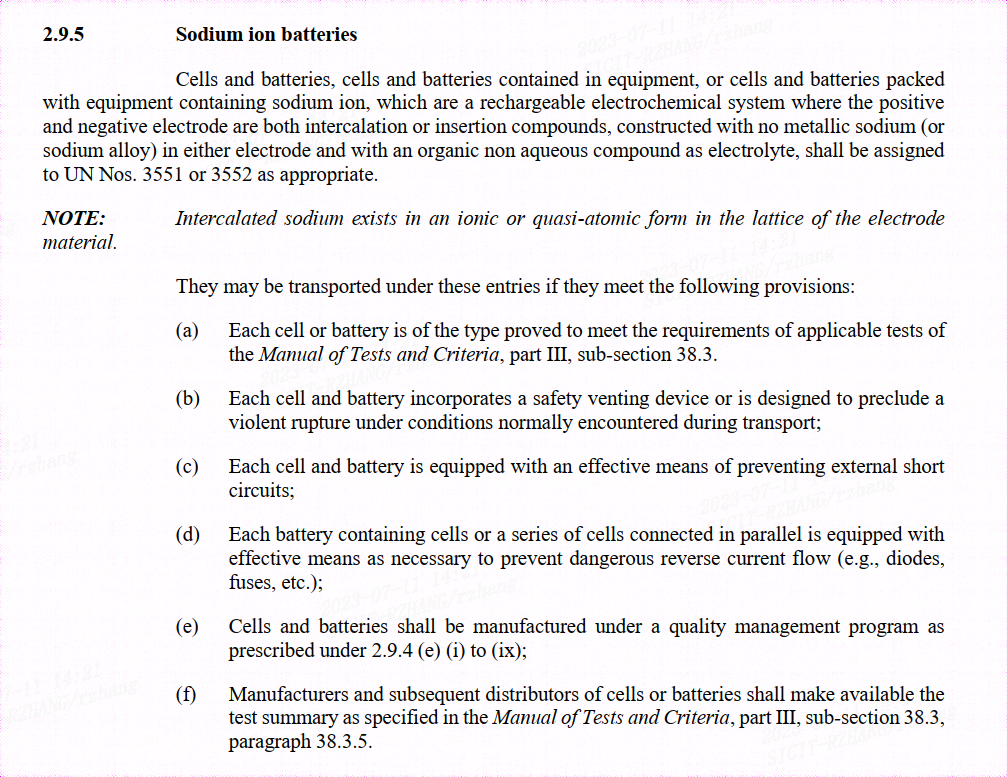
New UN Numbers and Classification:
The regulations assign two dedicated UN numbers to sodium-ion cells and batteries with an organic electrolyte (containing no metallic sodium):
- UN 3551: SODIUM ION BATTERIES (with organic electrolyte)
- UN 3552: SODIUM ION BATTERIES CONTAINED IN EQUIPMENT or PACKED WITH EQUIPMENT (with organic electrolyte)
Both are classified under Class 9 (Miscellaneous Dangerous Goods). This provides definitive guidance for documentation, marking, and packaging.
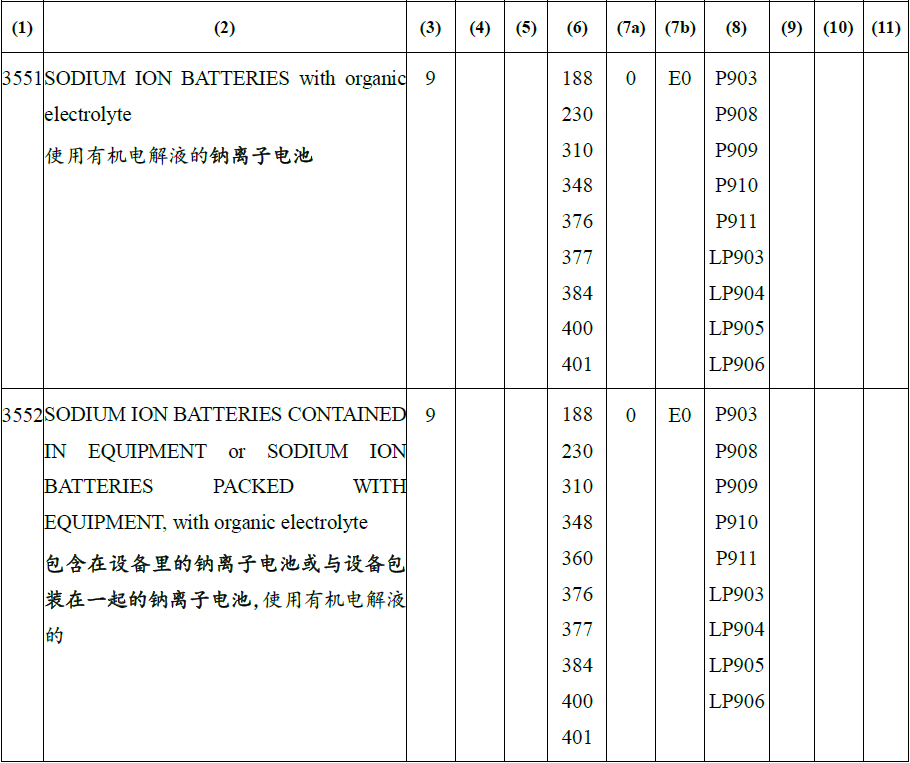
Key Transport Provisions:
Transport under these entries requires adherence to strict conditions, including:
- Passing the tests outlined in the UN Manual of Tests and Criteria, Part III, subsection 38.3.
- Incorporating safety vents and effective means to prevent external short circuits.
- Being manufactured under a certified quality management program.
- Availability of a Test Summary for provision to subsequent distributors and transporters.
Exemption (Special Provision 400):
Sodium-ion batteries that are fully discharged (short-circuited) to contain no electrical energy may be exempted from many provisions of the regulations if additional packaging and marking requirements are met. This can significantly reduce logistics complexity and cost.
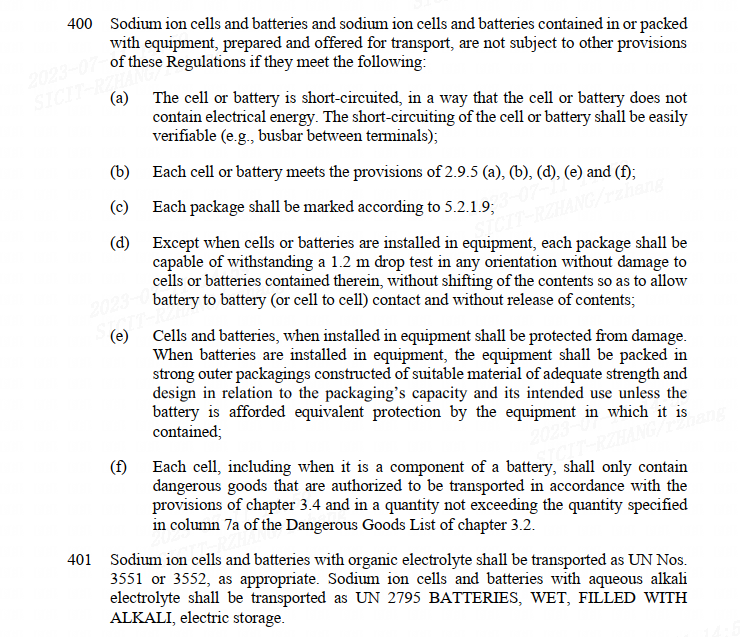
Critical Distinction:
Note that sodium-ion batteries with an aqueous alkali electrolyte must still be assigned to UN 2795, BATTERIES, WET, FILLED WITH ALKALI, which entails completely different shipping requirements.
Update 2: Exemption Limits Formalized for Articles Containing Gallium
Gallium is widely used in semiconductors and alloys. The new regulations introduce UN 3554, GALLIUM CONTAINED IN MANUFACTURED ARTICLES, and revise Special Provision 366 to include gallium alongside mercury for limited quantity exemptions:
- Sea & Land Transport: Manufactured articles containing 1 kg or less of gallium (or mercury) are generally not subject to the full regulations.
- Air Transport: Articles containing 15 g or less of gallium (or mercury) are generally not subject.

Operational Note:
This exemption is a recommendation in the Model Regulations. Its practical application depends on its adoption by carriers and the specific texts of the IMDG Code (sea) and IATA DGR (air). Confirmation with your freight forwarder prior to shipment is essential.
Update 3: Expanded Definition and Streamlined Process for "Recycled Plastics" Packaging
Supporting the circular economy, the revised definition of "recycled plastics material" benefits shippers using sustainable packaging.
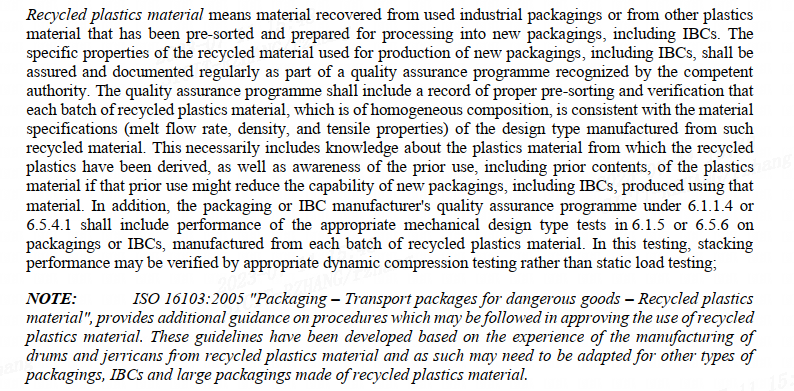
Broader Material Source:
The definition now accepts material recovered from "other plastics material" (including post-consumer recycled plastic), not just "used industrial packagings."
Enhanced Quality Assurance:
A quality assurance program is required. It must ensure traceability, verify material specifications (melt flow rate, density, etc.), and document prior use—especially if previous contents could compromise the new packaging's performance.
Optimized Testing:
The mandate for performance testing on every batch is replaced. Testing is now integrated into the manufacturer's quality assurance program for periodic validation, offering more operational flexibility.
Recommended Joint Action Steps
- Product Identification: Immediately review your product portfolio, especially for new battery types (sodium-ion) or articles containing gallium.
- Documentation & Data Preparation: For sodium-ion batteries, obtain the required UN 38.3 Test Summary from the manufacturer. For articles containing gallium, prepare precise gallium content analysis reports.
- Early Consultation: Provide this information to our operations or dangerous goods specialists before booking. This allows us to ensure proper classification, prepare all necessary transport documents (e.g., MSDS, Packaging Certificate, DGD, Air Transport Certificate), and arrange compliant packaging.
- Stay Informed: There can be a lag between UN Model Regulations updates and their implementation in carrier-specific rules and national regulations. We will help you monitor corresponding amendments to the IMDG Code and IATA DGR to ensure ongoing compliance for every shipment.