
Shipping Compliance Guide: Requirements for Transporting Energy Storage Capacitors (UN3508) as Dangerous Goods
Asymmetric Capacitors | Supercapacitors | International Sea & Air Freight
Energy storage capacitors, such as supercapacitors and asymmetric capacitors, are widely used in consumer electronics, industrial equipment, and new energy products. However, the chemical electrolytes and stored electrical energy within them often classify these components as Dangerous Goods for international sea or air freight, subject to stringent regulations. Correct classification and compliant handling are paramount to ensuring safe, timely delivery and avoiding severe penalties, delays, or port refusals.
This guide details the core shipping requirements for one common type: Asymmetric Capacitors under UN3508, to assist international buyers in understanding compliance essentials when sourcing such products from China.
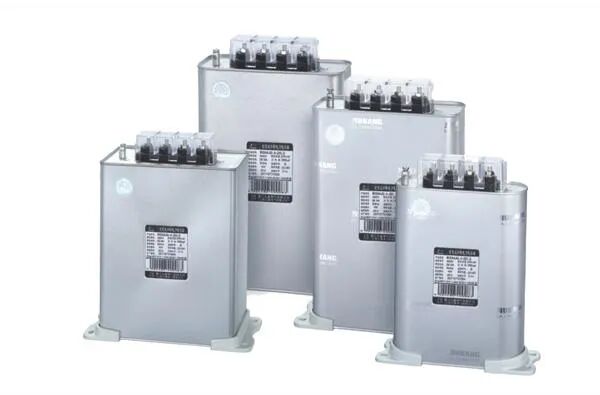
1. Key Criteria: When Does UN3508 Apply?
A capacitor is regulated under UN3508 (Class 9 Miscellaneous Dangerous Substances and Articles) only if it meets BOTH of the following conditions:
- Type: It is an "asymmetric capacitor," meaning its anode and cathode are made of different materials and it contains an electrolyte.
- Energy Storage: Its rated energy storage capacity exceeds 0.3 Watt-hours (Wh). The storage capacity is calculated as:
Wh = ½ × CN × (UR² − UL²) / 3600
where CN is the nominal capacitance, UR is the rated voltage, and UL is the rated lower limit voltage.
Capacitors with ≤ 0.3 Wh are generally not subject to UN3508 regulations.
2. Mandatory Safety Design and Marking Requirements
To be eligible for transport under UN3508, capacitors must meet the following design and construction standards:
- Short Circuit Protection: Designed to prevent short circuits during transport.
- Pressure Relief Mechanism: Fitted with vents or a weak point to safely release internal pressure. Any expelled liquid must be contained within the capacitor or device.
- Energy Marking: Capacitors manufactured after December 31, 2015, must be durably and legibly marked with their energy storage value in Wh.
- Pressure Differential Test: If the electrolyte itself meets the criteria for any other hazard class (e.g., corrosive, flammable), the capacitor design must withstand a 95 kPa pressure differential.
3. Tiered Transport Provisions Based on Electrolyte Hazard (Critical Distinction)
This is the most crucial part for operational compliance, determining the level of documentation, packaging, and labeling required.
| Electrolyte Hazard | Energy Range | Core Transport Requirements & Potential Exemptions |
|---|---|---|
| Non-Dangerous Electrolyte | Any value 0.3 Wh | Must meet all safety design conditions in Section 2. If met, they can be shipped under UN3508 and are generally exempt from all other dangerous goods provisions. |
| Dangerous Electrolyte | ≤ 20 Wh | In addition to the safety design conditions, unpackaged individual capacitors or modules must be capable of passing a 1.2-meter drop test onto an unyielding surface without loss of contents. If this test is passed, they are exempt from other requirements of the electrolyte's hazard class. |
| Dangerous Electrolyte | 20 Wh | Scenario A: Not contained in equipment Must fully comply with BOTH the UN3508 conditions AND all provisions of the electrolyte's primary hazard class (e.g., Class 8 Corrosive, Class 3 Flammable Liquid) for packaging, marking, labeling, and documentation. Scenario B: Contained in equipment If the equipment is packed in a strong outer packaging (or for large equipment, its construction provides equivalent protection) that prevents the capacitor from becoming defective during transport, then only the UN3508 conditions apply, and other hazard class requirements are exempted. |
4. Important Exception
Special Note: Nickel‑carbon asymmetric capacitors containing a Class 8 alkaline electrolyte are NOT shipped under UN3508. They must be assigned to UN 2795, BATTERIES, WET, FILLED WITH ALKALI, ELECTRIC STORAGE, which has different, more stringent requirements.
5. Recommendations for Buyers
Before placing orders with your Chinese suppliers, we strongly advise you to:
- Request Technical Data: Obtain the capacitor's exact rated energy storage (Wh) and its Electrolyte Safety Data Sheet (SDS) to determine its hazards.
- Obtain a Transport Condition Assessment: For complex or unclear cases, always arrange for a formal Transport Condition Assessment Report issued by a certified laboratory. This is the most authoritative document to prove compliance and ensure smooth customs clearance.
- Work closely with an experienced freight forwarder and your suppliers to manage transport risks from the source.
6. Conclusion
Understanding and applying the UN3508 regulations is fundamental to the safe, efficient, and compliant international shipping of products containing high-performance capacitors. Close collaboration with an experienced freight forwarder and your suppliers is essential to manage transport risks from the source.
Disclaimer: This guide provides general information based on IMDG Code and relevant dangerous goods regulations. Always consult your freight forwarder and certified dangerous goods personnel for specific cargo requirements. Regulations are subject to change.