
Critical Alert: Severe Penalties for Misdeclaring Hazardous Goods in Maritime Transport – A Case Study on "Caustic Soda" Misdeclared as "Plastic Pellets"
At Goodhope Freight, a premier International Freight Forwarder based in Shenzhen, China, we are committed to ensuring the highest standards of safety, compliance, and transparency in global supply chains. Recent enforcement actions by maritime authorities underscore a critical and escalating issue that impacts all stakeholders: the severe risks and legal consequences of misdeclaring or undeclaring dangerous goods in international logistics.
The following professional analysis, based on an official case published by Chinese maritime authorities, is intended to inform and educate our overseas buyers, partners, and the public about the stringent regulations governing the transport of chemicals and hazardous materials, whether by sea or air.
Case Review: A Costly Deception
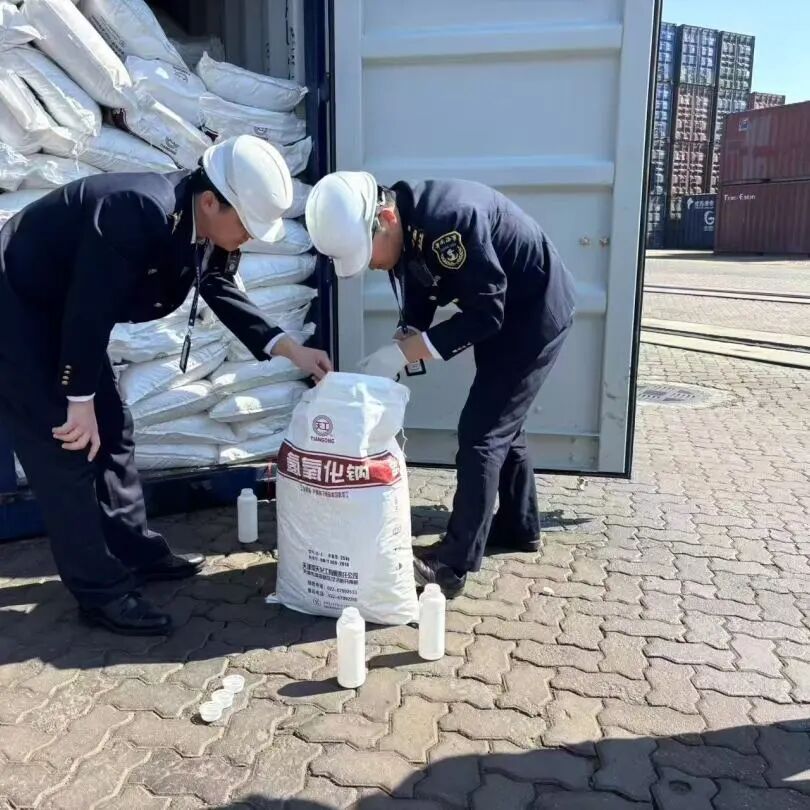
Incident: During a routine container inspection at a port, maritime enforcement officers discovered a severe discrepancy. Goods declared on the shipping documents as "Plastic Pellets" were found, upon physical inspection, to be Sodium Hydroxide (Caustic Soda). The packaging was clearly marked "Sodium Hydroxide," and the physical form (flakes) was inconsistent with plastic pellets.
Violation & Penalty: This act constitutes a clear violation of Article 63, Paragraph 2 of China's Maritime Traffic Safety Law, which explicitly prohibits "shippers from packing dangerous goods into general cargo or declaring dangerous goods as general cargo for shipment." The responsible shipper (consignor) faced significant administrative penalties from the maritime authorities.
Why This Matters
Misdeclaration is not a trivial paperwork error. Sodium Hydroxide (UN 1823) is a Class 8 Corrosive Substance as per the International Maritime Dangerous Goods (IMDG) Code. Its transport is governed by a strict global regulatory framework for a reason.
Professional Focus: Understanding Sodium Hydroxide (Caustic Soda) for Safe Transport
Sodium Hydroxide (NaOH), commonly known as caustic soda, lye, or soda lye, is a fundamental but highly hazardous industrial chemical. Its improper handling or declaration poses grave dangers.
1. Primary Hazards:
- Severe Corrosivity: Causes extreme chemical burns to skin, eyes, and the respiratory tract. Contact can lead to permanent injury or blindness.
- Heat Generation: Dissolves in water with intense heat release, which can cause violent reactions or container failure. It also reacts vigorously with acids.
- Hygroscopic Nature: Readily absorbs moisture from air, which can compromise packaging and affect other cargo.
2. Regulatory Classification (IMDG Code):
- Solid Sodium Hydroxide: UN 1823, Class 8 (Corrosive), Packing Group II.
- Sodium Hydroxide Solution: UN 1824, Packing Group II or III depending on concentration.
3. Key Logistics & Compliance Requirements:
| Requirement | Details |
|---|---|
| Packaging | Must use UN-certified packaging per Packing Instruction P002 (for solids). Containers must be securely sealed to prevent moisture ingress and leakage. |
| Marking & Labeling | Every package must bear the correct Proper Shipping Name, UN Number, and a Class 8 Corrosive label. The case above failed this most basic requirement. |
| Documentation | The Dangerous Goods Declaration (DGD) / Shipper's Declaration is a legal document. It must accurately state the UN number, proper shipping name, class, packing group, and other required details. Falsifying this document is illegal. |
| Stowage & Segregation | Class 8 goods have specific stowage categories ("Stowage Category A" for UN 1823) and require segregation from foodstuffs, acids, and other reactive materials onboard vessels. |
| Personnel Training | Anyone involved in handling, packing, or documenting dangerous goods must receive IMDG Code-compliant training. |
4. Consequences of Non-Compliance
- Legal & Financial: Heavy fines, shipment seizures, delays, and potential blacklisting by carriers.
- Safety Risks: Fire, explosion, toxic release, or corrosive incidents during handling, transport, or storage, endangering lives, vessels, and port facilities.
- Supply Chain Disruption: Significant delays for all cargo on the same vessel or at the terminal while authorities investigate.
- Environmental Damage: Spills can cause long-term ecological harm, leading to remediation costs and liability.
Our Professional Advice to International Buyers
- Conduct Due Diligence: Know your supply chain. Engage with reputable suppliers and forwarders who prioritize compliance.
- Demand Transparency: Insist on complete and accurate Material Safety Data Sheets (MSDS/SDS) and preliminary hazard information from your supplier for any chemical product.
- Verify Documentation: Ensure your freight forwarder provides and reviews the correct dangerous goods documentation before cargo arrival at the port.
- Understand Incoterms® Responsibilities: Clarity on terms like FOB, EXW, or DDP determines who is responsible for arranging compliant transport, documentation, and declaring the goods. Do not assume.
Conclusion
The misdeclaration of hazardous cargo like caustic soda as harmless plastic pellets is a serious breach of international law and safety protocols. It jeopardizes human safety, the environment, vessel integrity, and the reliability of the global logistics network.
As your strategic logistics partner in China, we enforce a strict "No Misdeclaration" policy. We provide expert guidance on the compliant classification, packaging, documentation, and transportation of all regulated materials, including chemicals, batteries, and other dangerous goods.
Let's work together to ensure safety, compliance, and efficiency in every shipment.
For a confidential consultation on your specific shipping requirements, please contact our Dangerous Goods Specialist team.
Disclaimer: This case study is for informational purposes based on publicly available enforcement actions. Regulations are subject to change. Always consult with certified dangerous goods professionals for specific cargo requirements.