
Safe Transport of Damaged, Defective, or End-of-Life Lithium Batteries: A Guide for Shippers and the Global Supply Chain
The exponential growth in the use of lithium-ion batteries brings with it a critical logistics challenge: the safe transportation of the increasing volume of damaged, defective, and retired lithium batteries resulting from repair, recall, or end-of-life cycles. For international buyers sourcing products from China and for all parties involved in the supply chain, understanding and complying with stringent international hazardous materials (hazmat) regulations is fundamental to ensuring safety, avoiding liability, and preventing costly delays.
This article outlines the key requirements from the perspective of international logistics (maritime/air transport) for dangerous goods.
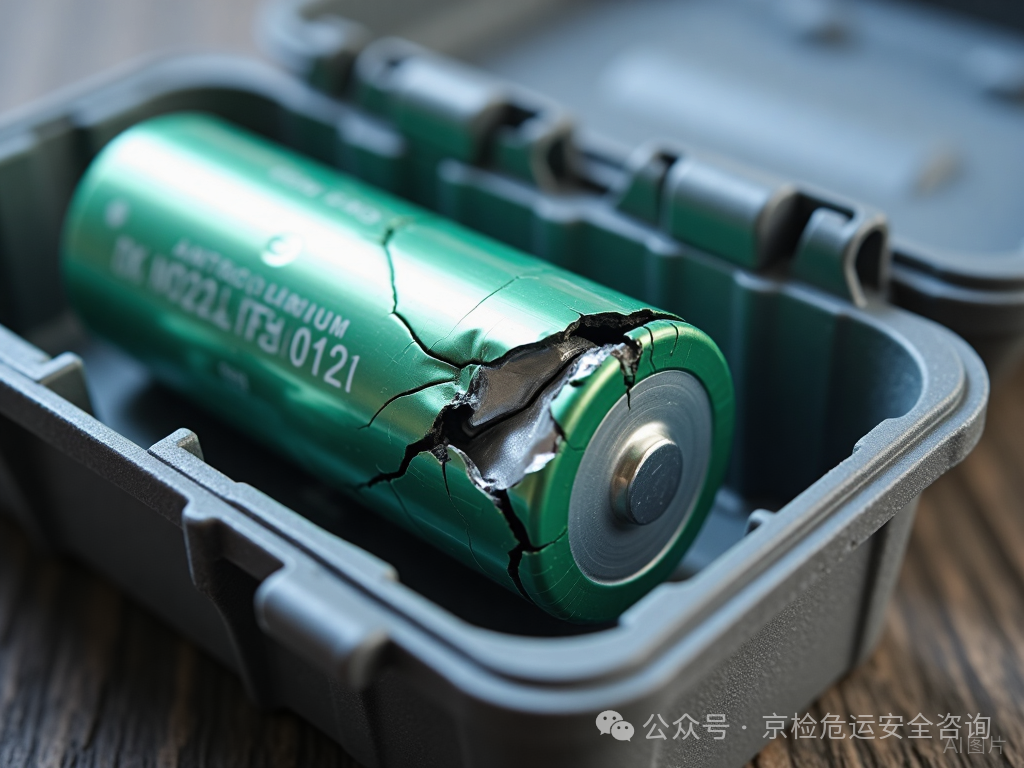
Definition: What Constitutes a "Damaged or Defective" Lithium Battery?
Per international regulations such as the IMDG Code, this category encompasses not only physically damaged cells but also batteries that are:
- Deemed defective for safety reasons.
- Leaking electrolyte.
- Of undetermined condition prior to shipment.
- Subjected to physical or mechanical damage that compromises safety.
Formal classification must be confirmed via an evaluation conducted by the manufacturer or a qualified technical expert against established safety criteria.
Transport Classification and Marking
Crucially, damaged/defective lithium batteries generally retain the same transport classification and UN Number as their new counterparts (e.g., UN 3480, Class 9 for lithium-ion battery assemblies). The critical distinction is in the marking: all packages must be conspicuously marked with "DAMAGED/DEFECTIVE" and "TRANSPORT IN ACCORDANCE WITH SPECIAL PROVISION 376".
Packaging: The Primary and Most Critical Defense
Packaging requirements are strictly tiered based on the assessed level of hazard.
A. For Damaged/Defective Batteries Presenting a General Risk:
- Packaging Types: Must use specified drums, boxes, or jerricans that meet the performance level for Packing Group II.
- Key Requirements:
- Individual Inner Packaging: Each cell, battery, or equipment containing such batteries must be individually packed in a leak-proof inner packaging, then placed in an outer packaging.
- Insulation & Short-Circuit Prevention: The outer package must be surrounded with sufficient non-combustible, non-conductive, thermally insulating material. Positive measures must be taken to prevent short circuits.
- Containment & Cushioning: For leaking cells/batteries, sufficient inert absorbent material must be used within the inner/outer packaging. Cushioning must be used to prevent movement and damage during transport.
- Venting: Sealed packages must be fitted with a venting device, where applicable.
B. For Batteries with Special Hazards (Prone to Rapid Disintegration, Fire, Dangerous Gas Release, etc.):
- Packaging Types: Must use packaging meeting the higher Packing Group I performance level.
- Additional Performance Requirements: The packaging must be proven, via testing acceptable to the Competent Authority, to:
- Limit external surface temperature to ≤100°C (with transient peaks ≤200°C acceptable).
- Prevent flames from appearing on the outside.
- Prevent the release of any projectile.
- Maintain structural integrity.
- Incorporate a gas management system (e.g., filtration, containment) where applicable.
- Approval & Documentation: The use of such packaging and specific transport conditions typically require prior approval from the Competent Authority of the country of origin. A copy of this approval must accompany the shipment.
Shipper and Carrier Obligations
- Shipper: Must provide the carrier with complete and accurate information. In accordance with Chinese regulations, the shipper must submit a Declaration on Fitness of Dangerous Goods to the Maritime Safety Administration in advance of shipment. Full documentation, including the Safety Data Sheet (SDS), must also be provided to the port operator.
- Carrier: Must file a Dangerous Goods Manifest with authorities prior to port entry/exit. Cargo must be stowed on board under Stowage Category A (acceptable on or under deck) but is strongly advised to be "AWAY FROM SOURCES OF HEAT".
Conclusion and Recommendations
Transporting damaged, defective, or end-of-life lithium batteries is a highly specialized operation demanding rigorous risk management. Success requires:
- Accurate Identification & Classification: Formal assessment by a qualified party.
- Compliant Packaging: Use of tested and approved packaging systems appropriate for the hazard level.
- Complete Documentation & Declarations: Ensuring all transport documents, markings, labels, and regulatory filings are accurate.
- Partnering with Expert Logistics Providers: Working with freight forwarders and carriers who have proven expertise in IMDG Code/IATA DGR regulations and practical experience handling these specialized hazardous materials.
For international buyers, explicitly defining responsibilities in contracts and logistics plans to ensure full supply chain compliance is essential for risk mitigation and successful shipment execution.
Disclaimer: This guide provides general information based on IMDG Code and IATA DGR regulations. Always consult your freight forwarder and certified dangerous goods personnel for specific cargo requirements. Regulations are subject to change.