
A Guide to the Safe Maritime Transport of Containerized Energy Storage Systems (ESS)
Introduction
Containerized Energy Storage Systems (ESS) are a key component of modern energy infrastructure, commonly used for large-scale storage. These systems, housed within standard container frames for ease of transport and scalability, are subject to specific international regulations when shipped by sea.
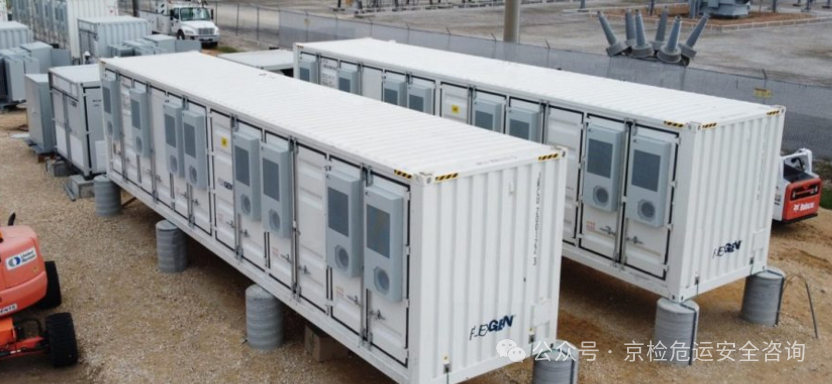
Classification and Identification
For maritime transport under the International Maritime Dangerous Goods (IMDG) Code, a fully assembled Containerized ESS is classified as:
- Hazard Class: Class 9 (Miscellaneous dangerous substances and articles)
- UN Number: UN 3536
- Proper Shipping Name (PSN): LITHIUM BATTERIES INSTALLED IN CARGO TRANSPORT UNIT
Primary Regulatory Framework: Special Provision 389 & Section 2.9.4
The transport conditions are primarily governed by IMDG Code Special Provision 389, which mandates full compliance with Section 2.9.4. The core safety requirements are as follows:
Design and Testing:
- Battery cells and modules must be of a type proven to meet the test requirements of the UN Manual of Tests and Criteria, Part III, Section 38.3. Test summaries must be available.
- Each battery and battery assembly must be equipped with a safety vent or be designed to preclude rupture under normal transport conditions.
- Effective means must be in place to prevent external short circuits and dangerous reverse current flow (e.g., using diodes or fuses).
Quality Management:
- Production must be managed under a quality management program that ensures traceability.
System Safety:
- The ESS must include necessary systems to prevent battery overcharge and over-discharge.
Secure Mounting within the Unit:
- All batteries must be securely fixed (e.g., within racks or cabinets) inside the cargo transport unit to prevent significant movement, short circuits, or accidental operation during handling and transport.
External Marking and Placarding:
- The individual batteries inside the unit are not required to bear hazard labels or markings.
- The cargo transport unit (container) itself must be placarded on two opposite sides with the Class 9 hazard placard.
- The UN number (UN 3536) must be displayed in black digits, at least 65 mm in height, on the exterior of the unit.
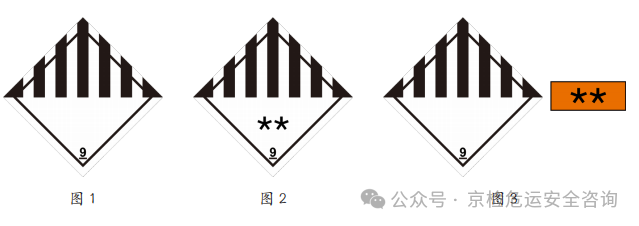
Important Restrictions on Contents
Only dangerous goods that are essential for the safe and normal operation of the ESS itself (e.g., fixed fire-fighting or thermal management systems) are permitted to be installed within the unit. The carriage of any non-essential dangerous goods inside the Containerized ESS is prohibited.
Shipping Documentation and Stowage
- Dangerous Goods Declaration: The shipper must provide a complete and accurate Dangerous Goods Declaration to the carrier.
- Pre-Notification: The vessel operator must notify the port authority at least 24 hours in advance of loading or arrival of such cargo.
- Onboard Stowage: Assigned Stowage Category A by the IMDG Code, units bearing UN 3536 may be stowed on deck or under deck. It is, however, a recommended industry best practice to stow them away from sources of heat.
- Note on Packing Certification: While a cargo transport unit containing packed dangerous goods typically requires a Container Packing Certificate, a Containerized ESS—being a pre-engineered, self-contained unit—is generally not subject to this requirement, though verification with the relevant competent authority is advised.
Disclaimer: This guide provides general information based on IMDG Code regulations. Always consult your freight forwarder and certified dangerous goods personnel for specific cargo requirements. Regulations are subject to change.