
Safe and Compliant Transportation of Ethylenediamine: Key Considerations in International Logistics
—— A Focus on Shipping Ethylenediamine from China
Introduction
For global purchasers and partners sourcing chemicals from China, understanding the intricacies of transporting hazardous materials like Ethylenediamine (EDA) is crucial for supply chain integrity. As a key industrial chemical, its safe transit from export hubs like Shenzhen requires strict adherence to international regulations. This article outlines the critical safety and operational requirements for shipping EDA by sea, based on the International Maritime Dangerous Goods (IMDG) Code.
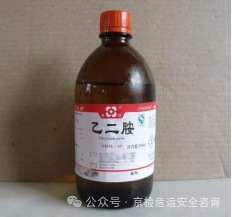
Hazard Profile
Ethylenediamine (UN 1604) is classified primarily as a Class 8 Corrosive substance with a subsidiary risk of Class 3 Flammable Liquid. Its properties dictate stringent handling:
- Flammability: Has a flashpoint of 34°C (closed cup).
- Corrosivity: Causes severe skin, eye, and tissue burns.
- Reactivity: Reacts violently with water and acids.
Professional Logistics Requirements
Safe international transport of EDA involves meticulous management across the entire logistics chain.
Packing and Quantity Limits:
- Packaging must be type-approved, meeting Packing Group II performance standards as per IMDG Code Packing Instruction P001.
- For bulk shipments, approved Intermediate Bulk Containers (IBCs) conforming to IBC02 or portable tanks meeting Tank Instruction T7 (including special provision TP2 for filling limits) are used.
- Small samples may be shipped under Excepted Quantities (EQ), Code E2. Inner receptacles must not exceed 1L, with a maximum net quantity of 30g/ml per inner and 500g/ml per outer package.
Marking, Labeling, and Documentation:
- All packages, IBCs, and cargo transport units must be correctly marked with the UN number and labeled with the Class 8 (primary) and Class 3 (subsidiary) hazard labels/placards.
- Shipping documents, especially the Dangerous Goods Declaration (DGD) and container/vehicle packing certificate, must be accurate and complete.
Stowage and Segregation on Board:
- Stowage: Assigned to Stowage Category A. It may be stored on or under deck on cargo ships and passenger ships carrying limited passengers. The Stowage Code SW2 applies, requiring stowage "separated from" living quarters.
- Segregation: Two key segregation rules must be followed:
- As per Segregation Group SGG18, it must be segregated "away from" alkalis.
- As per Segregation Code SG35, it must be segregated "separated from" acids of Segregation Group SGG1.
Emergency Preparedness:
- The Emergency Response code is EmS F-E, S-C.
- Fire: The risk of Boiling Liquid Expanding Vapor Explosion (BLEVE) is a major concern. Fight fire from a protected distance using copious amounts of water to cool containers.
- Spillage: Responders must wear full protective gear, including a Self-Contained Breathing Apparatus (SCBA). Spilled material reacts with water, producing flammable and toxic vapors. Remove sources of ignition and ventilate the area immediately. Contaminated gear must be decontaminated.
Our Commitment
Partnering with a knowledgeable freight forwarder in China is your first line of defense. We ensure full compliance in booking, declaration, packing, handling, and documentation. Through close coordination with carriers, terminals, and authorities, we build a seamless and transparent safe-transport chain for your hazardous cargo.
In dangerous goods logistics, safety is not an option but a fundamental commitment we uphold together for the resilience of your global supply chain.
Disclaimer: This guide provides general information based on IMDG Code regulations. Always consult your freight forwarder and certified dangerous goods personnel for specific cargo requirements. Regulations are subject to change.