
Understanding the Critical Markings and Labels for Fireworks: A Guide for International Importers
When sourcing pyrotechnic products (fireworks) from China, ensuring their safe and compliant international transportation is paramount. As a leading international freight forwarder based in Shenzhen, we wish to highlight the critical identification and labeling requirements that every overseas buyer must understand. These markings are not just administrative formalities; they are legally mandated safety communications for the entire supply chain, from factory to final destination.
1. UN Classification and Dangerous Goods Labeling
All fireworks are classified as Class 1 Explosives under the United Nations Model Regulations (UNMR). For transport purposes, they are further assigned to specific Compatibility Groups (e.g., 1.3G, 1.4G, 1.4S) and corresponding UN Numbers (e.g., UN 0333, UN 0334, UN 0335, UN 0336). This classification dictates the permissible packaging, stowage, and segregation requirements during shipment.
As per the International Maritime Dangerous Goods (IMDG) Code and IATA Dangerous Goods Regulations (DGR), the outer transport package must conspicuously display the following:
- The correct Dangerous Goods Label (Class 1 Explosive label).
- The Proper Shipping Name (e.g., "FIREWORKS").
- The assigned UN Number (e.g., "UN 0336").
- The complete Package Marking in accordance with regulations.
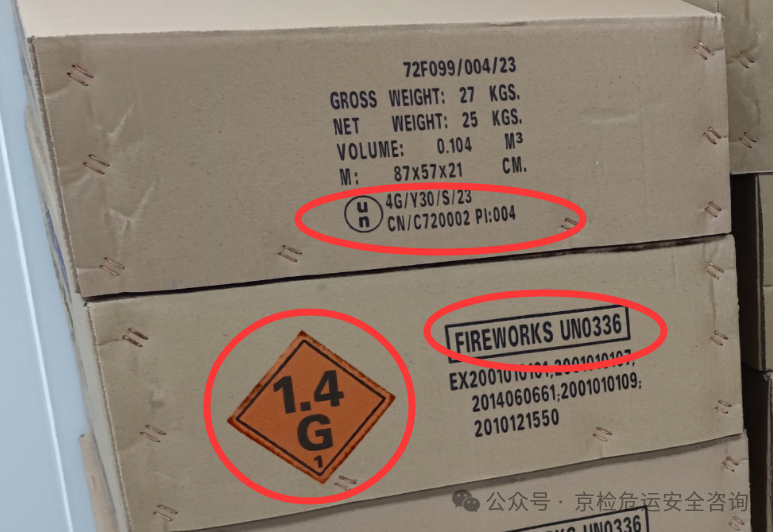
Example of a compliant package marking:
un 4G/Y30/S/23 CN/C720002 PI:004
This marking conveys critical information about the package's UN specification approval, gross weight, manufacturer code, and production details.
2. China Customs' Mandatory Manufacturer Code (Crucial for Export Clearance)
In addition to UN markings, all fireworks exported from China must bear a unique China Customs Manufacturer Code. This code is a regulatory tracking identifier mandated by the General Administration of Customs of China (GACC). Its structure is standardized as follows:
- Part 1 (2 digits): Represents the local (直属) Customs district where the manufacturer is registered (e.g., "49" for Changsha Customs).
- Part 2 (Letter "F"): Stands for "Fireworks".
- Part 3 (3 digits): Unique sequential number assigned to the manufacturer within that Customs district (e.g., "003").
- Part 4 (Batch/Year): Indicates the export batch and year of production, separated by a "/" (e.g., "/005/99" means the 5th batch in 1999).
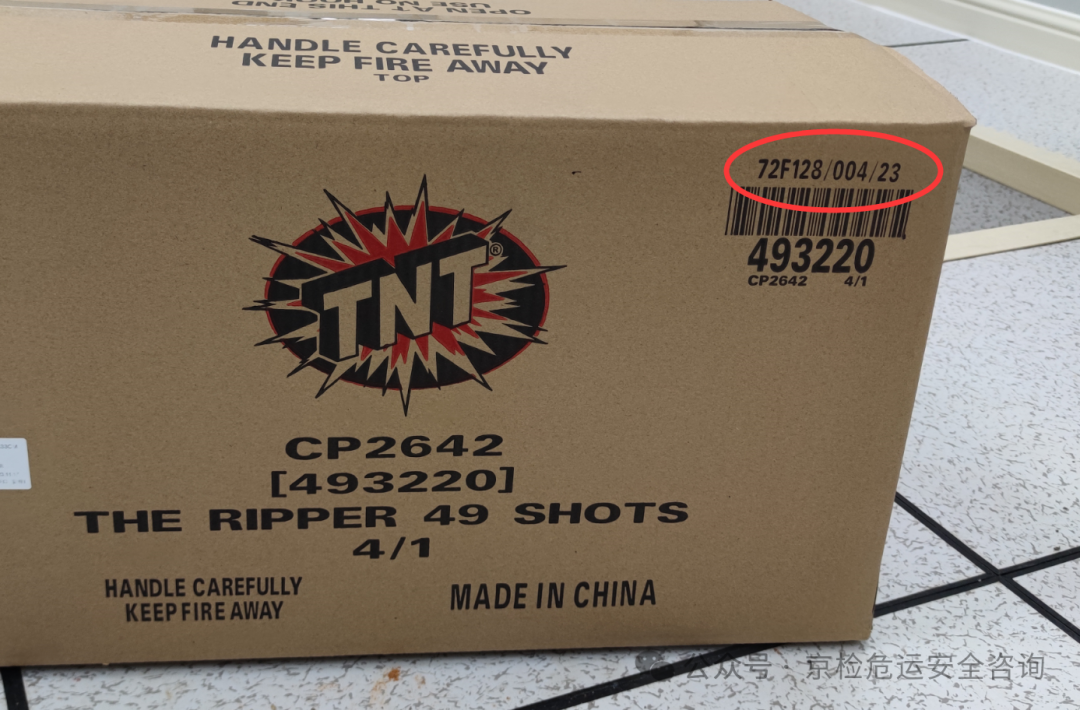
Example: 49F003/005/99
- 49 = Changsha Customs District
- F = Fireworks
- 003 = Manufacturer #3 in Changsha
- 005/99 = 5th export batch of 1999
Key Compliance Point: The first six characters of this code (e.g., 49F003) must be permanently printed on the top-right corner of the transport package. The batch/year information is completed by the exporter.
3. Additional Operational & Regulatory Requirements
- Safety Warnings: Packages should bear clear handling instructions like "HANDLE WITH CARE" and "KEEP AWAY FROM FIRE".
- Mode-Specific Labels: For air freight, additional and more stringent labeling is required as per IATA DGR, which may differ from sea freight (IMDG Code) requirements.
- National Standards: All products and their packaging must also comply with the Chinese national standard GB 10631 for fireworks.
Conclusion for Buyers
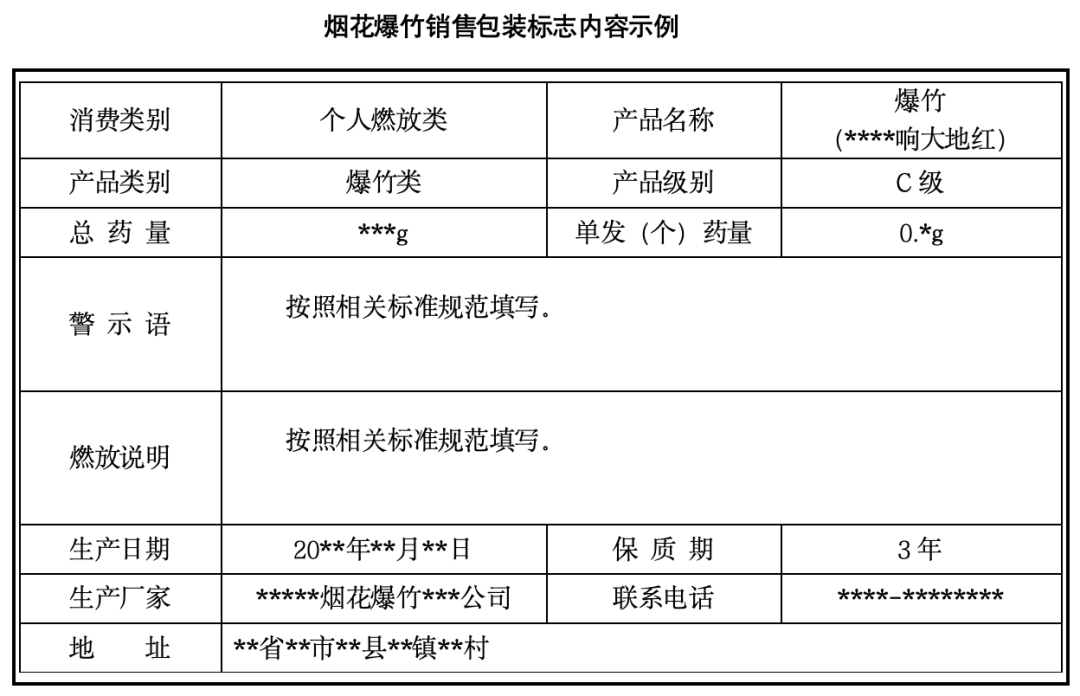
Verifying the presence and correctness of these markings on your shipment is a fundamental step in managing your supply chain risk. Incorrect or missing labels can lead to severe consequences, including cargo rejection at the port, substantial fines, delays, and most importantly, safety hazards. Always work with your freight forwarder to ensure your supplier provides complete and compliant documentation and packaging markings prior to shipment.
Disclaimer: This guide provides general information based on IMDG Code, IATA DGR, and GACC regulations. Always consult your freight forwarder and certified dangerous goods personnel for specific cargo requirements. Regulations are subject to change.