
Decoding Hazard Labels: Are Dashed Borders Mandatory for Dangerous Goods Shipments?
A Clarification for International Shippers and Consignees
For businesses involved in the global supply chain, particularly those shipping chemical or dangerous goods from regions like China via sea or air, compliance with international transport regulations is paramount. A common point of confusion arises regarding the precise formatting of hazard labels, specifically the border surrounding the diamond-shaped placard.
A frequent question we encounter is: "Must the outer border of a hazard label be a dashed line? Will a solid line cause issues with customs or port state control during inspections?"
The answer, definitively outlined in the International Maritime Dangerous Goods (IMDG) Code, clarifies a widespread misconception.
1. The Regulatory Basis: Solid and Dashed Lines Are Equally Compliant
The authoritative reference is IMDG Code, Section 5.2.2.2.1.1.1. The regulation states:
"Labels shall be displayed on a background of contrasting colour, or shall have either a dotted or solid outer boundary line."
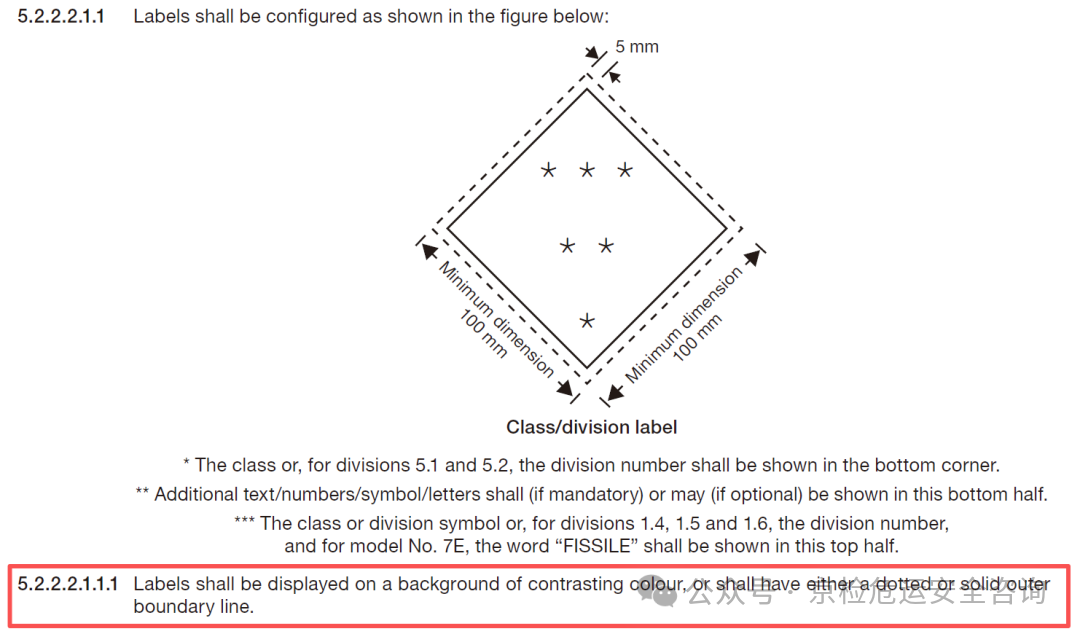
This clause provides two compliant options for label presentation:
- Displaying the label on a contrasting background color, or
- Having a clearly defined outer boundary, which can be either dotted (dashed) or solid.
Therefore, the belief that a dashed border is mandatory is incorrect. Both solid and dashed outer boundary lines fully meet the regulatory requirement, provided the label itself is clearly visible and legible.
Label Format Comparison: Dashed vs Solid Borders
Dashed Border ✓
Solid Border ✓
Both formats are permitted under IMDG Code Section 5.2.2.2.1.1.1
The prevalence of dashed borders in standard practice stems from two main factors:
- Illustrative Precedent: Most training materials, regulatory manuals, and example figures within the IMDG Code itself use dashed lines to depict hazard labels. This establishes a strong visual standard that many assume is the only standard.
- Industry Convention: Most label manufacturers and suppliers default to producing labels with dashed borders, reinforcing this as the de facto norm across the industry.
2. Why the Misconception Persists
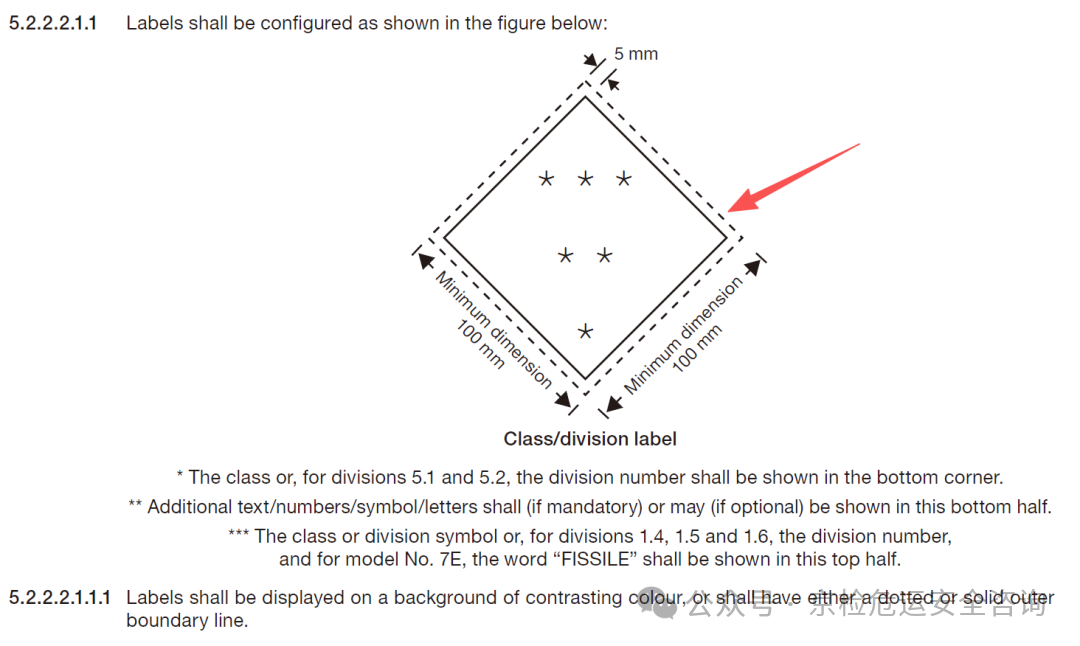
While understandable, this convention should not be mistaken for a regulatory mandate. The code explicitly permits the solid-line alternative.
3. Practical Guidance for International Shippers
Despite the regulatory equivalence, we strongly recommend the following operational practice:
Continue to use hazard labels with dashed borders for your shipments.
Reason: While a solid border is technically compliant, it may deviate from the inspector's immediate expectation. During cargo checks at ports, terminals, or by vessel operators, inspectors are conditioned to see the dashed-line format. A solid border, though legal, could prompt additional scrutiny, requests for clarification, or brief holds while the inspector verifies compliance. In time-sensitive logistics operations, this can lead to unnecessary delays, added documentation requests, and potential disruptions to your supply chain schedule.
4. The Core Principle: Clarity and Recognition
The fundamental intent of the IMDG Code's labeling requirements is to ensure that hazards are instantly and unambiguously recognizable to all parties in the transport chain. The debate between dashed and solid lines should not overshadow this primary objective. A compliant label, whether with a solid or dashed border, must be durable, prominently displayed, and stand out clearly from its background.
Conclusion
For international shippers and their overseas partners, understanding the precise letter and intent of regulations like the IMDG Code is crucial for smooth operations. Regarding hazard label borders:
- Fact: Both solid and dashed outer boundary lines are permitted under the IMDG Code.
- Recommendation: Adhere to the industry-standard dashed border format to minimize the risk of inspection delays and ensure seamless cargo handover.
By focusing on both regulatory compliance and practical operational wisdom, you can mitigate risks and ensure the efficient, safe transport of your dangerous goods consignments worldwide.
Disclaimer: This guide provides general information based on IMDG Code regulations. Always consult your freight forwarder and certified dangerous goods personnel for specific cargo requirements. Regulations are subject to change.