
Unlocking Safer, Simpler Shipments: A Guide to Limited and Excepted Quantities of Dangerous Goods
Streamlining Small Package Logistics
In the complex world of international supply chains, the transportation of small quantities of chemicals, samples, or components classified as Dangerous Goods (DG) can often seem disproportionately challenging and costly. To facilitate trade and ensure safety, international regulations have established provisions for "Limited Quantities" (LQ) and "Excepted Quantities" (EQ). These provisions are designed for "small volume, low-risk" dangerous goods that, due to their minimal quantity and robust packaging, present a significantly lower hazard. When these conditions are met, shippers are granted exemptions from many of the full-scale dangerous goods transportation requirements, simplifying the process for air and ocean shipping.
1. Regulatory Framework
These provisions are not arbitrary but are strictly defined by major international modal regulations, ensuring global consistency:
- UN Model Regulations (TDG): The foundational source, Recommendations on the Transport of Dangerous Goods – Model Regulations.
- IATA DGR: For air transport, the International Air Transport Association Dangerous Goods Regulations.
- IMDG Code: For sea transport, the International Maritime Dangerous Goods Code.
- National Regulations: Such as China's Rules for Road Transport of Dangerous Goods (JT/T 617), which often align with international standards for domestic trucking prior to port departure.
Reference Standards: GB 28644.1-2012 (Excepted Quantities) & GB 28644.2-2012 (Limited Quantities)
2. Determining Eligibility: The Key is the UN Number
The first and most critical step is to determine if a specific product is eligible for LQ or EQ shipping. This is not a subjective assessment. Eligibility is exclusively determined by referencing the Dangerous Goods List in the applicable regulations (e.g., TDG, IMDG Code, IATA DGR) using the substance's United Nations (UN) Number.
- Column 7a (Limited Quantity): Specifies the maximum net quantity per inner packaging (e.g., "1 L" for liquids, "1 kg" for solids). A "0" in this column means LQ transport is not permitted for that entry.
- Column 7b (Excepted Quantity): Assigns an alphanumeric code (E0 to E5) which corresponds to strict inner and outer package maximum limits.
- E0: Excepted Quantity transport is not permitted.
- E1 to E5: Define precise limits. For example, E2 allows a maximum of 30 ml/g per inner package and 500 ml/g per outer package.
Example: For UN1865, n-Propyl nitrate, Column 7a shows "1L" and Column 7b shows "E2". This means it can be shipped as a Limited Quantity (up to 1L per inner package) or as an Excepted Quantity under the E2 limits.
3. Mandatory Package Marking & Labeling
Correct and visible marking is non-negotiable and is a primary means of communicating the package's special status to handlers and authorities.
Limited Quantity Mark
A diamond-shaped mark containing a black "Y". The words "Limited Quantity" or "LTD QTY" must appear. Crucially, the mark for air transport differs slightly in design from that used for sea/road transport.

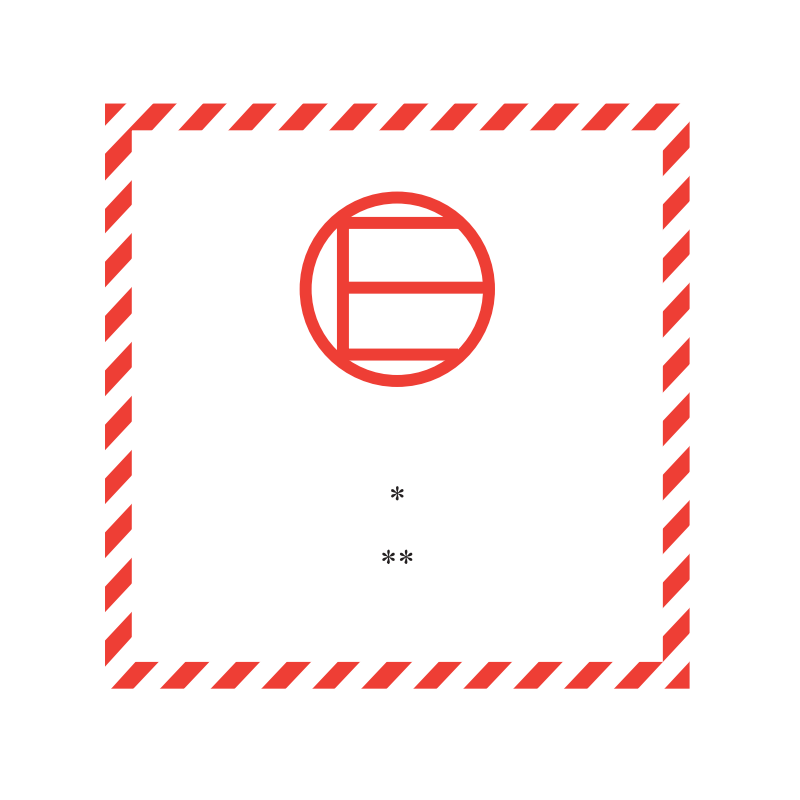
Excepted Quantity Mark
A diamond-shaped mark containing the identifier "**". The mark must be completed on the package by:
- Replacing the upper "*" with the primary hazard class/division number.
- Replacing the lower "**" with the consignor or consignee name, if not displayed elsewhere on the package.
Additional Marks
- Packages containing liquid dangerous goods in combination packaging must display orientation arrows on two opposite sides.
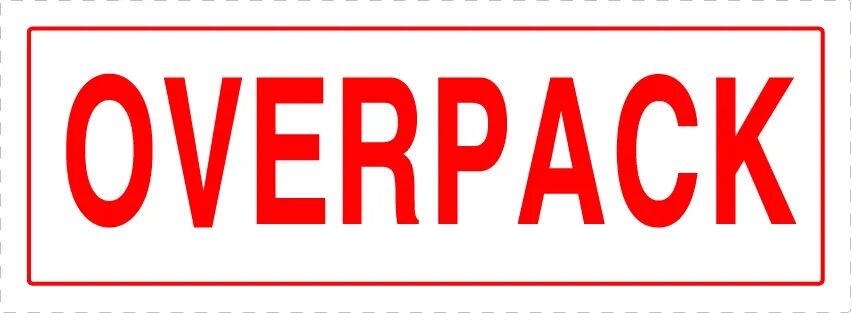
- An overpack containing LQ/EQ packages must be clearly marked with the word "OVERPACK".
4. Implications for Export from China (Customs & Compliance)
Understanding the regulatory exemptions is vital for smooth customs clearance:
- Export Documentation: Because LQ/EQ packages are exempt from the full performance testing requirements for dangerous goods packaging (e.g., TDG 6.1.5), an export shipment declared as LQ/EQ does not need the Chinese "Performance Test Result Sheet for Transport Packaging of Exit Goods" for customs purposes.
- Import Compliance: Importers must note that while some testing exemptions apply, the packaging's type, markings, category, and the presence of proper GHS hazard communication labels are still subject to inspection by destination country authorities.
5. Significant Advantage: Domestic Road Transport as "General Cargo" in China
A major logistical benefit within China is covered by the Measures for the Safety Management of Road Transport of Dangerous Goods (effective Jan. 1, 2020). It states that a vehicle carrying:
- No more than 1,000 Excepted Quantity packages, or
- No more than 8,000 kg total gross mass of Limited Quantity packages
...may be transported as general cargo (non-hazardous). This dramatically simplifies and reduces the cost of the inland trucking leg to the port or airport.
Quick Reference: LQ vs EQ at a Glance
| Feature | Limited Quantities (LQ) | Excepted Quantities (EQ) |
|---|---|---|
| Reference Column (DG List) | Column 7a | Column 7b (E codes) |
| Package Mark | Diamond with black "Y" + "Limited Quantity"/"LTD QTY" | Diamond with "**" (hazard class + consignor/consignee name) |
| Inner Package Limit | Up to specified volume/mass (e.g., 1L, 1kg) | Strict E1-E5 limits (e.g., E2: 30ml/g inner) |
| Outer Package Limit (Road/Air) | ≤ 30 kg gross (air); varies by mode | ≤ 1L/1kg (E5) to 500ml/g (E2) outer limit |
| China Road Transport (as general cargo) | ≤ 8,000 kg total gross mass | ≤ 1,000 packages |
| Performance Test Certificate (China export) | NOT required | NOT required |
Conclusion: A Compliant Path to Efficiency
Shipping under Limited Quantity or Excepted Quantity provisions does not change the fundamental hazardous nature of the goods. It is a compliance-driven pathway designed for safety and efficiency. Success depends on:
- Accurate Identification: Verifying eligibility via the UN Number and the Dangerous Goods List.
- Strict Quantity Adherence: Not exceeding the maximum limits specified in Columns 7a or 7b.
- Perfect Marking: Applying the correct, regulation-specific marks and labels.
- Modal Rules: Following the specific packaging and documentation rules of IATA DGR (air) or IMDG Code (sea).
By leveraging these provisions correctly, shippers and buyers of chemical products can achieve a safer, more streamlined, and cost-effective international shipping process for small-volume consignments.
Pre-Shipment Checklist for LQ/EQ Shipments from China
- ✔ Verify UN Number eligibility (Column 7a not "0" for LQ; Column 7b not "E0" for EQ)
- ✔ Confirm inner and outer package quantities meet specified limits
- ✔ Apply correct LQ or EQ diamond mark on outer packaging
- ✔ Add orientation arrows for liquids (two opposite sides)
- ✔ Mark "OVERPACK" if using an overpack
- ✔ Prepare commercial invoice with LQ/EQ declaration (no full DG performance test certificate needed)
- ✔ For China road transport: ensure total LQ mass ≤ 8,000kg or EQ packages ≤ 1,000 for general cargo classification
- ✔ Retain supporting documentation (SDS, UN number reference) for customs inspection
Disclaimer: This guide is based on UN Model Regulations, IATA DGR, IMDG Code, and Chinese regulations (JT/T 617, GB 28644). Regulations are subject to change. Always consult your freight forwarder and certified dangerous goods personnel before shipping.