
Navigating Transportation Regulations: A Practical Guide for Shipping Markers from China
—— A Focus on Shipping Markers from China
Introduction: Beyond a Simple Stationery Item
For global retailers, designers, and procurement managers sourcing markers from China, understanding the correct shipping classification is not just a logistics formality—it is a critical component of cost management, supply chain safety, and regulatory compliance. Misclassifying these products can lead to significant delays, fines, rejected shipments, and even safety hazards during maritime or air transport.
This guide breaks down the key determinants—ink type and ink delivery system—to help you accurately identify whether your shipment of markers is classified as General Cargo or Dangerous Goods (Hazardous Materials).
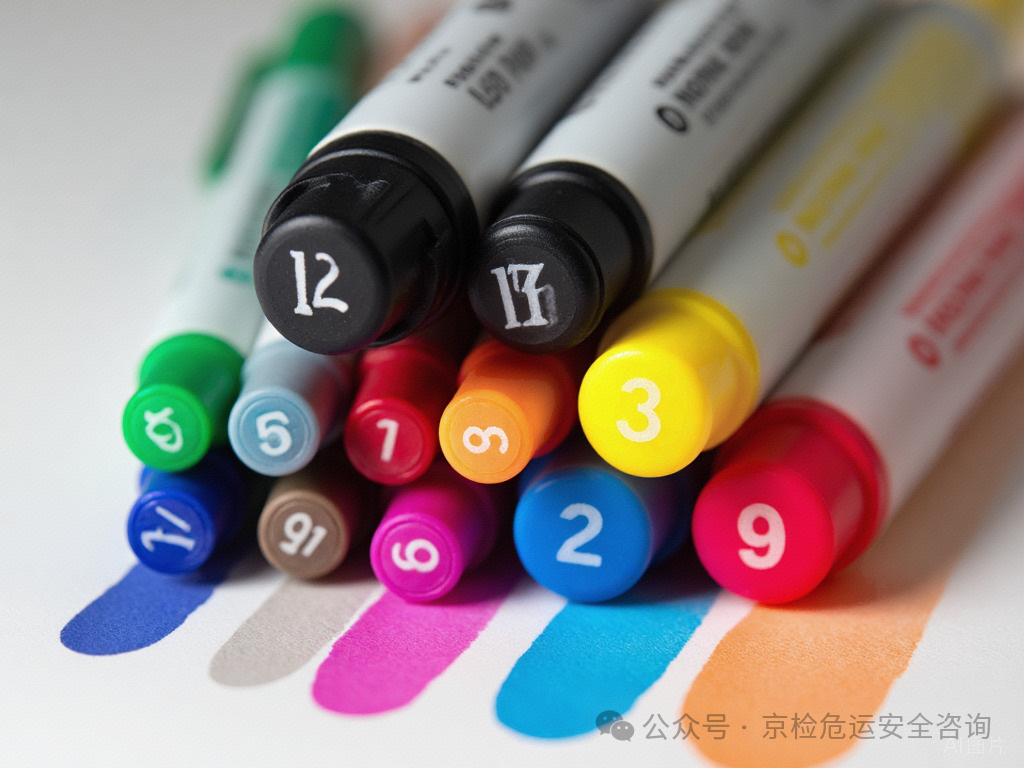
Part 1: The Core Determinant – Ink Chemistry
The primary factor in classification is the chemical nature of the ink itself.
Water-Based Markers: The ink in these markers is non-hazardous for transport. Therefore, both the markers and their ink cartridges, when shipped separately, are universally considered General Cargo (Non-Dangerous Goods). No special documentation, packaging, or labeling is required.
Alcohol-Based & Oil-Based Markers: The inks used in these markers are typically formulated with flammable solvents. In their pure, liquid form, these inks are almost always classified as Class 3 Flammable Liquids under international transport regulations (such as IMDG Code for sea and IATA DGR for air).
Important Exception: Liquid ink may be exempt from full Dangerous Goods regulations if it can be scientifically proven (via certified testing) that its flash point is above 60°C (140°F) for air cargo or above 35°C (95°F) for sea cargo, and that it is not sustainally combustible.
Part 2: The Deciding Factor – The Marker's Internal Design
When shipping the complete marker pen, it is regulated as an "article" containing a hazardous substance. The design of its ink reservoir fundamentally changes the shipping classification.
Scenario A: Markers with Replaceable Ink Cartridges (Liquid Reservoir)
In this design, the flammable ink remains in a free liquid state inside a sealed cartridge within the pen. This configuration is treated as an item containing dangerous goods.
- Classification: Dangerous Goods.
- Possible Proper Shipping Names (PSN):
- UN 3363, Dangerous Goods in apparatus (Class 9), or
- UN 3540, Articles containing flammable liquid, n.o.s. (Class 3).
- Implication: Full compliance with Dangerous Goods regulations is mandatory. This requires certified packaging, clear labeling/marking, a Dangerous Goods Declaration (DGD), and proper stowage/separation on board. It cannot be shipped as general cargo.
Scenario B: Markers with Fiber Reservoir (e.g., Porous Felt or Foam)
Here, the flammable ink is fully absorbed into a solid, porous material, similar to an alcohol swab. This physical state change allows for a potential exemption.
- Default Classification: UN 3175, Flammable solid, organic, n.o.s. (Class 4.1).
- The Critical Exemption – Special Provision 216: This provision in the IMDG Code provides a pathway for reclassification to General Cargo. If all the following conditions are met, the markers are not subject to Dangerous Goods regulations:
- There is no free liquid visible inside the item.
- The total volume of flammable liquid (ink) absorbed by the solid material in each sealed item (marker) is less than 10 milliliters (ml).
- The absorbed liquid meets the criteria for Packing Group II or III.
Conclusion and Proactive Advice
- For Water-Based Markers: Proceed as General Cargo. No special considerations are needed.
- For Alcohol/Oil-Based Markers:
- Identify the Design: Determine if your supplier's markers use ink cartridges (liquid) or a fiber reservoir (absorbed).
- Cartridge System: Plan and budget for a full Dangerous Goods shipment.
- Fiber System: Verify with your supplier that each marker contains less than 10ml of ink and that there is no free liquid. If confirmed, you may ship as General Cargo, drastically simplifying logistics and reducing cost.
Key Takeaway: Engaging with your Chinese supplier early in the procurement process to clarify the exact ink type and internal construction of the markers is the most effective step to ensure compliant, efficient, and cost-effective international transportation. A small verification upfront can prevent major disruptions and unexpected expenses downstream in your supply chain.
Disclaimer: This guide provides general information based on IMDG Code and IATA DGR regulations. Always consult your freight forwarder and certified dangerous goods personnel for specific cargo requirements. Regulations are subject to change.