
Navigating the Complexities of Shipping "Multi-Component" Chemical Products: A Case Study on Polyester Resin Kits
Introduction: A Real-World Shipping Challenge
As an international freight forwarder based in Shenzhen, China, we frequently encounter complex regulatory questions from our global clients. A common and practical challenge arises with products that consist of multiple, chemically different components packed together for end-use. A prime example is "Polyester Resin Kits" (commonly known in some markets as "body filler" or "atomic putty" for automotive/industrial repairs), which are essential for industries from automotive to marine and furniture manufacturing.
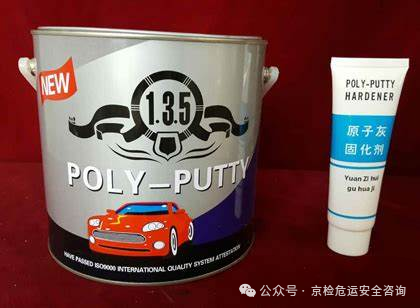
These kits typically contain two separate components within one sales package:
| Component | Description | Typical Classification |
|---|---|---|
| Base Component | A liquid unsaturated polyester resin | Class 3 Flammable Liquid (e.g., UN 1993) |
| Hardener/Curing Agent | Contains organic peroxides to initiate polymerization | Class 5.2 Organic Peroxide (e.g., UN 3105, Type D) |
The Regulatory Dilemma
If we consult the International Maritime Dangerous Goods (IMDG) Code or the IATA Dangerous Goods Regulations (DGR) for air transport strictly by the book, we face an immediate conflict. The Segregation Table within these rules often mandates "segregation" between Class 3 (Flammable Liquids) and Class 5.2 (Organic Peroxides). This would, in principle, prohibit packing these two distinct hazardous materials within the same outer shipping package.
This creates a significant gap between regulatory theory and commercial reality. How can a product designed to be mixed on-site be shipped legally if its components must be separated?
The Solution: Evolution of Regulations for Practical Compliance
The dangerous goods transportation framework is not static or impractical. Recognizing the widespread use and specific nature of such pre-packaged chemical kits, the regulatory bodies (like the UN Committee of Experts on TDG and the IMO) introduced dedicated entries. This ensures safety is maintained without hindering legitimate trade.
For Polyester Resin Kits, the regulations now provide specific, appropriate classifications:
- UN 3269, Polyester resin kit, liquid base: Class 3 Flammable liquid.
- UN 3527, Polyester resin kit, solid base: Class 4.1 Flammable solid.
Key Takeaway for International Buyers
This case perfectly illustrates a critical principle in global logistics: Dangerous goods regulations are dynamic, risk-based, and designed to facilitate safe and practical trade. The rules evolve with new products and technologies. The approach is neither universally restrictive nor blindly lenient; it is a pragmatic and evidence-based balance between managing real-world hazards and enabling global supply chains.
When sourcing chemical products from China (or anywhere), especially multi-component kits, it is crucial to work with a knowledgeable logistics partner. A professional forwarder will ensure the product is correctly classified under the most current and appropriate UN number and shipping name, which dictates all subsequent requirements for packaging, marking, labeling, documentation, and declarations.
Looking Ahead
Proper shipping of UN 3269/3527 involves specific requirements for Safety Data Sheets (SDS/GHS), testing reports, competent authority approvals where applicable, and correct documentation for sea (e.g., Dangerous Goods Declaration) or air transport. These operational details are essential for compliant shipment execution.
Disclaimer: This guide provides general information based on IMDG Code and IATA DGR regulations. Always consult your freight forwarder and certified dangerous goods personnel for specific cargo requirements. Regulations are subject to change.