
Navigating the Correct Classification of Portable Oxygen Bottles: A Critical Guide for Safe International Transport
—— A Focus on Shipping Portable Oxygen Bottles from China: UN1950 vs UN1072 Classification
Introduction
In the complex and highly regulated world of international freight, particularly for air and sea transport, the correct classification of dangerous goods is not merely a formality—it is the cornerstone of legal compliance, safety, and operational feasibility. Misclassification can lead to shipment delays, significant fines, cargo rejection, and, most critically, serious safety hazards. This article addresses a common point of confusion in the logistics of consumer and medical products: the proper shipping classification for portable, disposable oxygen bottles. We will clarify why relying on generic online information is insufficient and demonstrate how to determine the correct classification by referencing the definitive source: the International Maritime Dangerous Goods (IMDG) Code and its counterpart for air transport, the IATA Dangerous Goods Regulations (DGR).
1. The Problem: Why UN1072 is Often Incorrect and Impractical
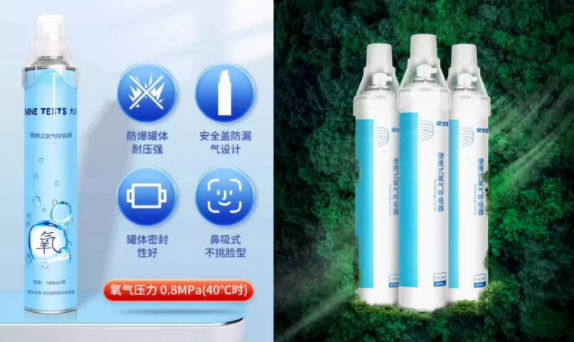
Many online resources, and even some expert articles, may suggest classifying portable oxygen bottles as UN1072, OXYGEN, COMPRESSED. While oxygen is indeed the contents, this classification presents an immediate and often insurmountable operational hurdle for disposable (non-refillable) cylinders.
The Key Issue: Pressure Vessel Certification: The packaging instruction associated with UN1072 (e.g., P200 in IMDG Code) is designed for refillable pressure vessels (e.g., industrial gas cylinders). These cylinders must possess a valid periodic inspection certificate, often called a "pressure vessel certificate" or "cylinder certification."
The Reality for Disposable Bottles: Portable oxygen bottles for personal or emergency use are typically non-refillable, disposable containers. They are not designed or manufactured to the same standards as refillable industrial cylinders and are not subject to the same re-inspection schemes. Therefore, it is impossible and inappropriate to obtain the required "cylinder certificate" for them. Attempting to ship under UN1072 will result in the cargo being rejected by carriers or authorities due to non-compliant packaging documentation.
Lesson: Do not base dangerous goods transport decisions on internet searches alone. Authoritative regulations (IMDG/IATA) must be consulted directly.
2. The Correct Classification: UN1950 AEROSOLS
The appropriate shipping description for most disposable portable oxygen bottles is UN1950, AEROSOLS. The subsidiary risks are 2.2 (Non-flammable, non-toxic gas) and 5.1 (Oxidizing substances).
Regulatory Justification: This classification is directly supported by the definition in the IMDG Code (Section 1.2.1) and IATA DGR.
An "Aerosol" or "aerosol dispenser" is defined as an article meeting specific construction criteria (see 6.2.4), made of non-refillable metal, glass, or plastic. It contains a compressed, liquefied, or dissolved gas under pressure, with or without a liquid, paste, or powder. It is fitted with a release device allowing the contents to be ejected as solid or liquid particles in suspension in a gas, as a foam, paste, or powder, or in a liquid or gaseous state.
A portable oxygen bottle with a valve/regulator assembly is a non-refillable container filled with a compressed gas (oxygen) and equipped with a release device. It fits this definition perfectly, regardless of whether it dispenses a pure gas or a mixture.
Operational Practicality: Shipping under UN1950 aligns with the physical nature of the product.
- It does not require a periodic pressure vessel certificate.
- Instead, the filled containers must successfully pass a standardized test, such as the hot water bath test (as per IMDG Code 6.2.4 / IATA Packing Instruction 202), which verifies their integrity at a specific elevated temperature. This is a standard quality control test for disposable pressure containers.
| Classification | UN Number | Key Requirement / Issue |
|---|---|---|
| Incorrect (Typically) | UN1072 - OXYGEN, COMPRESSED | Requires periodic pressure vessel certification. Impossible for disposable bottles. Leads to cargo rejection. |
| Correct | UN1950 - AEROSOLS (2.2 + 5.1) | No pressure vessel certificate required. Requires hot water bath test certification. Full compliance achievable. |
Conclusion and Recommendations for Buyers
For international buyers sourcing products like portable oxygen bottles from China:
- Specify the Design: Clearly confirm with your supplier that the product is a disposable, non-refillable container.
- Verify the Classification: Ensure your supplier or freight forwarder provides a Material Safety Data Sheet (MSDS/SDS) and a Dangerous Goods Declaration based on the correct classification: UN1950, AEROSOLS. The package markings and labels must correspond to this.
- Demand Regulatory Compliance: Work with logistics partners who demonstrate expertise in dangerous goods regulations (IMDG Code for sea; IATA DGR for air) and base their procedures on the primary regulatory texts, not secondary interpretations.
- Packaging and Testing: Confirm that the shipment complies with the relevant packaging instruction (e.g., PI 202 for air, P003 or applicable instruction for sea) and that the manufacturer has conducted the required safety tests on the filled containers.
Correct classification is the first and most critical step in ensuring your dangerous goods shipments move safely, legally, and efficiently across global supply chains. When in doubt, always defer to the official regulations and consult with certified dangerous goods specialists.
Disclaimer: This guide provides general information based on IMDG Code and IATA DGR regulations. Always consult your freight forwarder and certified dangerous goods personnel for specific cargo requirements. Regulations are subject to change.