
Navigating Compliance: A Logistics Guide to Shipping Chemicals to Australia
Introduction
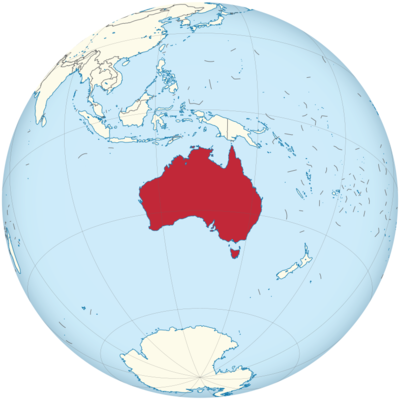
For global purchasers sourcing chemical products, raw materials, or manufactured goods containing chemicals from China, ensuring compliance with destination-country regulations is critical for smooth customs clearance and supply chain integration. Australia, a key trading partner, maintains a stringent regulatory framework for imported chemicals centered on Safety Data Sheets (SDS) and workplace labels aligned with the Globally Harmonized System of Classification and Labelling of Chemicals (GHS), Revision 7. From a logistics standpoint, non-compliant SDS or labels can lead to customs holds, significant demurrage and penalty charges, and serious safety risks during transport, storage, and handling. This article outlines Australia's regulatory system and explains how suppliers must ensure documentation compliance before arranging sea or air transport for chemical goods—particularly those classified as dangerous goods.
1. The Australian Regulatory Framework: The Foundation of Logistics Compliance
Australia's chemical management system is based on the model Work Health and Safety (WHS) laws developed by Safe Work Australia. This framework has fully adopted GHS Revision 7 since January 1, 2023. For logistics operations, the most directly relevant instruments are:
- Model Work Health and Safety Regulations: These are mandatory technical regulations specifying detailed requirements for chemical classification, SDS, and labelling.
- National Guide for Classifying Hazardous Chemicals: This document serves as the operational manual for suppliers to assign correct GHS classifications—the essential first step in generating compliant SDS and labels.
Key Takeaway: Chemicals exported to Australia must be accompanied by SDS and labels that adhere to the above regulations. Failure to meet these WHS requirements creates a barrier to customs clearance.
2. Hazardous Chemical Classification: The First Step in Pre-Shipment Identification
In logistics, a product's correct hazard class and UN number are fundamental for determining its transport conditions (packaging, stowage, segregation, documentation). The primary responsibility for classification lies with the supplier (manufacturer/exporter), who should base the classification on:
- Valid test data or toxicological studies.
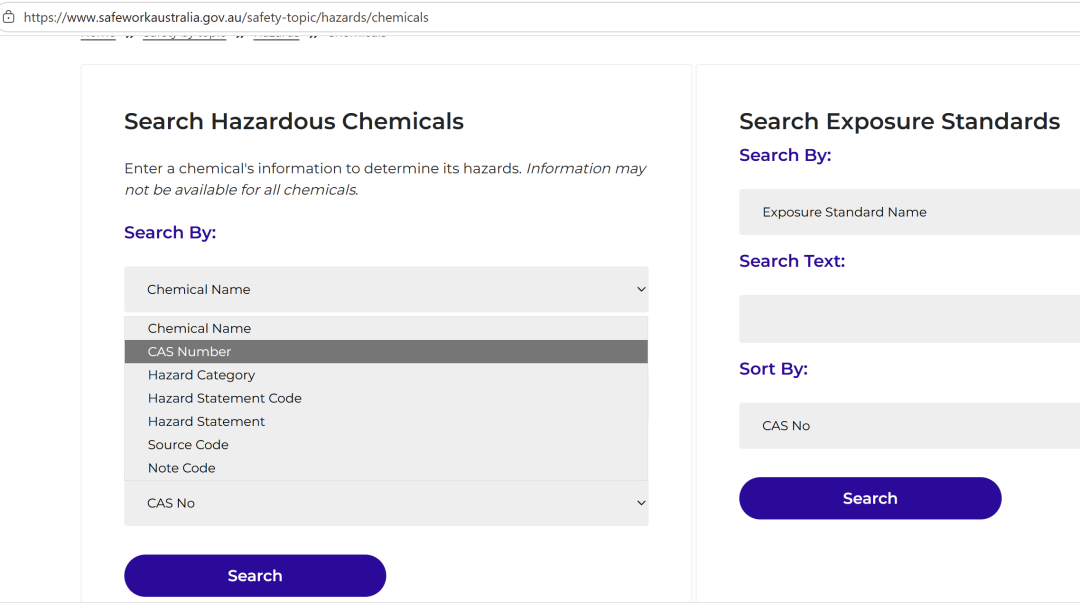
- Information from authoritative databases, such as Australia's official Hazardous Chemical Information System (HCIS). The HCIS is the definitive tool for verifying the Australian GHS classification of a specific chemical (via CAS number or name), allowing logistics and compliance personnel to cross-check supplier-provided information.
- Other international databases (e.g., the EU's ECHA database, the US OSHA database) for supplementary reference.
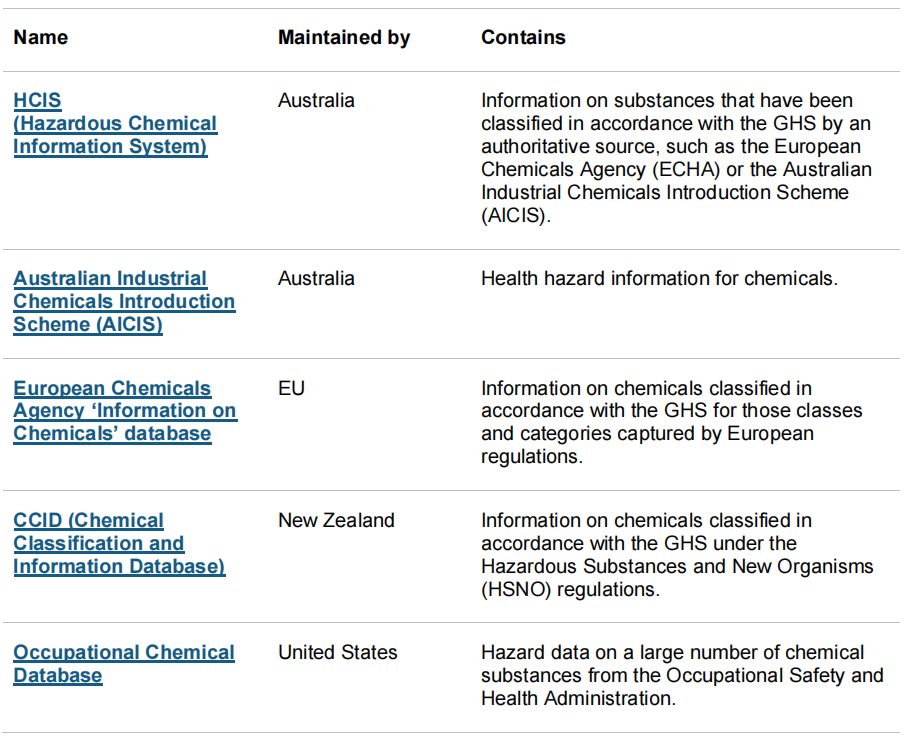
Logistics Implication: Purchasers should require Chinese suppliers to provide accurate GHS Revision 7 classifications and may conduct preliminary verification using the HCIS. An incorrect classification will render all subsequent SDS, labels, and transport markings (e.g., placards) non-compliant.
3. The Safety Data Sheet: The Safety Passport for the Supply Chain
The SDS is not only a workplace safety document but also a critical resource for logistics emergency response. Australia's SDS preparation guide mandates the standard 16-section format. Sections of particular importance for international transport include:
| SDS Section | Key Information for Logistics |
|---|---|
| Section 14: Transport Information | Must clearly state the proper shipping name, UN number, hazard class, packing group, etc.—information directly used to complete the Declaration for Sea Transport or Shipper's Declaration for Dangerous Goods by Air. |
| Section 2: Hazard Identification | Contains the pictograms, signal word, and hazard statements, which must be consistent with the labels on the outer packaging. |
| Sections 7-8: Handling and Storage, Exposure Controls | Provide essential safety instructions for port and warehouse personnel. |
Critical Note: Using an SDS prepared for the Chinese domestic market for Australian exports is typically non-compliant. It must be reviewed and revised according to Australian regulations and GHS Revision 7.
4. Workplace Hazardous Chemical Labels: The Compliance Badge on Packaging
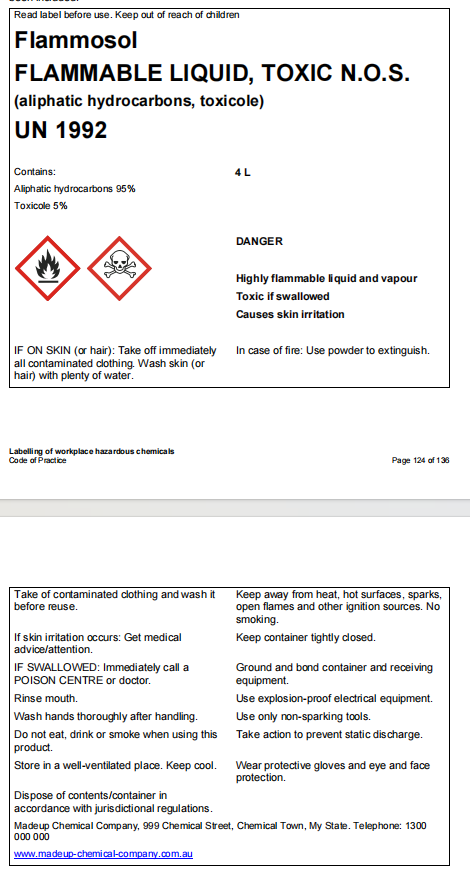
The WHS label is the immediate hazard communication tool affixed to chemical containers or outer packaging. In logistics, it must be consistent with the SDS and meet the following requirements:
- Mandatory Elements: Product identifier, supplier details, GHS pictogram(s), hazard statements, and precautionary statements.
- Logistics-Specific Scenarios: Specific exemptions and alternative labelling rules (e.g., placing the label on the outer package) apply for small containers, combination packagings, or transport units.
- Transport Label vs. Workplace Label: It is crucial to distinguish between Australia's WHS label (for the workplace) and the transport label required by the Australian Code for the Transport of Dangerous Goods by Road and Rail (ADG Code). Shipments often require both the ADG Code transport marking (for the road/rail leg) and the WHS workplace label (for the end-use site). Exporters must ensure outer packaging complies with both labelling sets.
5. Actionable Recommendations for International Purchasers
To ensure chemicals sourced from China are cleared for entry into the Australian market, we recommend the following steps:
| Action Item | Recommended Steps |
|---|---|
| Define Responsibility | Explicitly state in procurement contracts that the supplier must provide SDS and labels compliant with Australian GHS Revision 7 and WHS regulations. |
| Verify Early | Require suppliers to provide the basis for their GHS classification and conduct preliminary checks using the Australian HCIS database. |
| Audit Documentation | Before shipment, have the draft SDS and labels reviewed by a specialized agency or an internal compliance team, paying particular attention to the accuracy and completeness of Section 14 (Transport Information) and all label elements. |
| Coordinate Logistics | Provide the finalized, compliant SDS to your freight forwarder and Australian customs broker well in advance to facilitate preparation of the required dangerous goods transport documentation. |
Conclusion
Proactively managing chemical compliance during the procurement and logistics planning phase is the most effective strategy to mitigate risk, avoid delays, and control costs. Understanding and implementing Australia's requirements for SDS and WHS labels is not only a legal obligation but also a professional imperative for ensuring a safe and efficient international supply chain. Ensuring your Chinese suppliers are fully aware of these requirements is the key to the successful sea or air shipment of every chemical consignment to Australia.