
Understanding the Transportation of Toxic Substances (Class 6.1 Dangerous Goods)
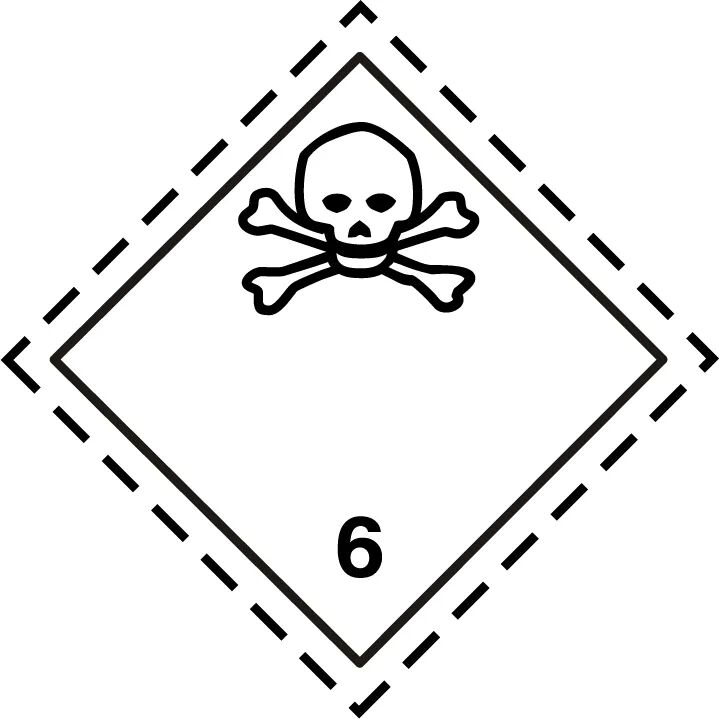
Target Audience: International procurement managers, logistics planners, and compliance personnel involved in the import of chemical products from China.
Introduction
When sourcing chemical products from overseas, understanding the regulatory framework for their safe and compliant transportation is crucial. A significant category within international freight, particularly for air and sea transport, is Class 6.1: Toxic Substances. This article provides a concise overview of how these substances are classified, tested, and regulated for global shipment, ensuring that all stakeholders are aware of the critical safety standards involved.
1. What are Toxic Substances?
In the context of dangerous goods transportation, a toxic substance is defined as a material liable either to cause death, serious injury, or harm to human health if swallowed, inhaled, or by skin contact. The degree of hazard depends on the exposure pathway (oral, dermal, inhalation), duration of exposure, and most importantly, the dose.
2. Key Classification Standards for Transport (UN Model Regulations)
The primary global standard for dangerous goods transport is the United Nations Recommendations on the Transport of Dangerous Goods, Model Regulations. For Class 6.1 substances, classification into one of three Packing Groups (PG) is based on the substance's acute toxicity, measured by LD₅₀ (median lethal dose) or LC₅₀ (median lethal concentration).
| Packing Group | Hazard Level | Oral Toxicity LD₅₀ | Dermal Toxicity LD₅₀ | Dust/Mist Inhalation Toxicity LC₅₀ |
|---|---|---|---|---|
| Packing Group I | High danger | ≤ 5 mg/kg | ≤ 50 mg/kg | ≤ 0.2 mg/L |
| Packing Group II | Medium danger | 5 and ≤ 50 mg/kg | 50 and ≤ 200 mg/kg | 0.2 and ≤ 2.0 mg/L |
| Packing Group III | Low danger | 50 and ≤ 300 mg/kg | 200 and ≤ 1000 mg/kg | 2.0 and ≤ 4.0 mg/L |
Note for Shippers: The assigned Packing Group directly determines the permitted packaging standards, labeling, and documentation required for your shipment under codes such as the IMDG Code (sea) and IATA DGR (air).
3. The GHS Acute Toxicity Classification (Harmonization)
Separate from, but related to, transport classification is the Globally Harmonized System of Classification and Labelling of Chemicals (GHS). GHS focuses on hazard communication through Safety Data Sheets (SDS) and labels. It categorizes acute toxicity into five hazard categories (Category 1 being the most severe) based on the same exposure pathways, using an Acute Toxicity Estimate (ATE). While transport (Packing Group) and GHS (Category) criteria are aligned in principle, the exact numerical thresholds and purposes differ. Ensuring your supplier provides a correctly classified SDS (per GHS) is the first step in identifying a potential Class 6.1 shipment.
4. Classification Testing and Due Diligence
The toxicity data (LD₅₀/LC₅₀) used for classification is derived from standardized acute toxicity tests. Internationally recognized methods, such as those from the OECD Guidelines for the Testing of Chemicals, are employed. Reputable testing laboratories conduct these studies to determine the correct hazard class with minimal animal use.
Procurement & Logistics Action Point: Prior to booking freight, buyers should:
- Request Documentation: Obtain a valid Safety Data Sheet (SDS) and, if applicable, a Dangerous Goods Declaration or Transport Classification Report from the manufacturer/supplier.
- Verify Classification: Confirm the substance's UN number, proper shipping name, class (6.1), and packing group.
- Engage Experts: For mixtures or substances of unknown or variable composition, a professional hazard classification identification service is essential to determine the correct transport status.
5. The Classification Process
Classifying a substance for transport is not merely a table look-up. Competent experts must also consider:
- Human experience with accidental poisoning.
- The substance's physical state (e.g., volatile liquid, fine powder).
- Other hazardous properties (e.g., corrosive to skin, leading to higher absorption).
- Data from validated (Q)SAR models or analogy to similar, well-studied chemicals.
The safe and lawful international transport of toxic substances hinges on precise hazard classification. As a critical link in the supply chain, international procurement professionals must understand these fundamentals. Ensuring that your Chinese suppliers are compliant with these global standards is not just a regulatory requirement—it is a fundamental responsibility for the safety of the entire logistics chain, from the factory floor to the final destination.
Key References for Compliance:
UN Model Regulations (ST/SG/AC.10/1/Rev.23)
Globally Harmonized System (GHS) (ST/SG/AC.10/30/Rev.10)
International Maritime Dangerous Goods (IMDG) Code
IATA Dangerous Goods Regulations (DGR)