
Navigating the Sea Transport of Vehicles as Dangerous Goods: A Shipper's Guide
Introduction
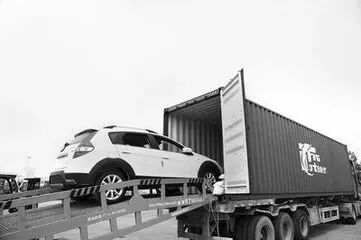
For international buyers sourcing vehicles from China – be they electric cars, motorcycles, lawn tractors, or self-propelled machinery – understanding their classification for ocean freight is crucial. A vehicle is not merely a unit of cargo; it is a complex assembly containing multiple hazardous components such as fuel (Class 3/Division 2.1), batteries (Class 8/9), fire extinguishers (Class 2), and airbag inflators (Class 9). Consequently, the consolidated shipment of vehicles, especially within containers, is strictly regulated under the International Maritime Dangerous Goods (IMDG) Code. This guide outlines the key regulatory frameworks and exemptions to ensure your shipments are compliant, safe, and efficiently cleared for transport.
1. UN Number Classification for Vehicle Shipments
The IMDG Code assigns specific UN numbers based on the vehicle's primary power source. Correct identification is the first and most critical step. The primary entries are summarized below:
| UN Number | Proper Shipping Name | Class | Key Special Provisions |
|---|---|---|---|
| UN3166 | VEHICLE, FLAMMABLE GAS POWERED or VEHICLE, FLAMMABLE LIQUID POWERED or VEHICLE, FUEL CELL, FLAMMABLE GAS POWERED or VEHICLE, FUEL CELL, FLAMMABLE LIQUID POWERED | 9 | SP356, SP388, SP961, SP962 |
| UN3171 | BATTERY-POWERED VEHICLE or BATTERY-POWERED EQUIPMENT | 9 | SP388, SP961, SP962, SP971 |
| UN3556 | VEHICLE, LITHIUM ION BATTERY POWERED | 9 | SP384, SP388, SP405, SP961, SP962 |
| UN3557 | VEHICLE, LITHIUM METAL BATTERY POWERED | 9 | SP384, SP388, SP405, SP961, SP962 |
| UN3558 | VEHICLE, SODIUM ION BATTERY POWERED | 9 | SP384, SP388, SP404, SP405, SP961, SP962, SP977 |
2. Understanding Critical Exemptions: Special Provisions 961 & 962
The IMDG Code provides significant exemptions that can simplify logistics if conditions are met. The two most important provisions are SP961 (Full Exemption) and SP962 (Limited Exemption, Class 9).
- Special Provision 961 (Full Exemption): Vehicles meeting any of the following conditions are exempt from all IMDG Code requirements:
- Stowed in a vehicle space, ro-ro space, or on the weather deck of a ro-ro ship, with no leaks from power systems.
- Powered by flammable liquid with a flash point ≥ 38°C, with fuel tank capacity ≤ 450L and batteries protected against short circuit.
- Powered by flammable liquid with a flash point < 38°C, with the fuel tank emptied. The tank is considered "empty" when drained to the point where the vehicle is inoperable; no cleaning or purging is required.
- Powered by flammable gas, with the tank emptied, pressure ≤ 2 bar, shut-off valves closed, and batteries protected.
- Powered only by wet, dry, or sodium batteries, with batteries protected against short circuit.
- Powered only by sodium-ion batteries, with the battery intentionally short-circuited to contain no electrical energy.
- Special Provision 962 (Limited Exemption): Vehicles that do not qualify under SP961 must be assigned to Class 9 and comply with the following:
- No leaks from batteries, engines, fuel cells, or tanks.
- For liquid-fueled vehicles, fuel tanks must not be more than one-quarter full, with an absolute maximum of 250L.
- For gas-fueled vehicles, fuel shut-off valves must be securely closed.
- Installed batteries must comply with SP388 or SP977 and be protected from damage and short circuit.
- Note: Marking, labeling, placarding, and marine pollutant requirements apply only if the vehicle is completely enclosed by packaging (e.g., in a crate).
3. Key Operational Notes for Shippers
- Definition of "Vehicle": Includes any self-propelled apparatus for transporting people or goods (e.g., cars, trucks, motorcycles, electric bikes, wheelchairs, lawnmowers, boats, aircraft).
- Packaged Components: Hazardous goods integral to the vehicle's operation (batteries, airbags) are not subject to the rules if securely installed. If vehicles are disassembled for packaging, separate rules may apply to components.
- Documentation Requirements: For shipments that are not fully exempt, standard dangerous goods documentation is mandatory. This typically includes:
- Dangerous Goods Declaration / Document of Compliance
- Container/Vehicle Packing Certificate
- Shipper's Declaration for Dangerous Goods
- Material Safety Data Sheet (MSDS/SDS)
- Vessel's Dangerous Goods Manifest
Successfully shipping vehicles from China requires a precise understanding of their hazardous components and the applicable IMDG Code exemptions. Correct classification under UN3166, UN3171, or the UN35xx series, coupled with a diligent assessment against SP961 and SP962, determines the complexity of your shipment. As your logistics partner, we ensure that all regulatory, documentation, and stowage requirements are meticulously handled, providing a seamless and compliant supply chain for your automotive and machinery imports.